The Salt Path
The Salt PathIn The Salt Path, the salt path is both the route beneath the walkers’ feet and the changing idea that makes their journey possible. It begins as a practical answer to having nowhere to return to; through fatigue, weather, interruption, and renewed walking, it becomes a source of rhythm and attention, and finally a form of home that does not depend on owning land. Its meaning remains unsettled: the path offers direction and choice, but cannot remove the homelessness, illness, or uncertainty that make stopping difficult.
A route chosen from homelessness
The path first acquires its force in early August, when the narrator and Moth stand with their rucksacks beside them in Taunton. Travel had once meant going away with the assurance of a door to return to. Now there is no door. The place they occupy on the roadside feels safer than anywhere else, and moving from it is not yet an uncomplicated act of freedom. They choose the walk because they need a reason to keep moving and a way to shape a future. After paying to reach Minehead, with only fifty pounds left and forty-eight pounds expected in the bank each week, the large commitment of a 630-mile walk begins under immediate financial pressure.
At Minehead, the start is a hesitation before it is a journey. The walkers linger at the monument marking the beginning of the South West Coast Path, taking photographs and adjusting their packs before setting off. Their first steep climb quickly exposes the gap between the guidebook’s mild description and the terrain underfoot. Rereading Paddy Dillon’s guide on a bench, they discover that what sounded like a slight inland rise means an excruciating zigzag ascent. The route is not an abstraction that can be mastered from a map: its actual demands are learned by breathless bodies on the slope.
The path’s interruptions matter too. After a bus carries them to Westward Ho!, the narrator feels as though the journey has been cheated. The unexpected break leaves the pair disconnected, and the town’s grey appearance disappoints the expectation created by its exuberant name. Their movement is not a seamless pilgrimage. A change in transport can loosen the sense of purpose that walking has built, while the dwindling money and Moth’s need for a beer make the practical costs of continuing visible again.
The body learns the coast
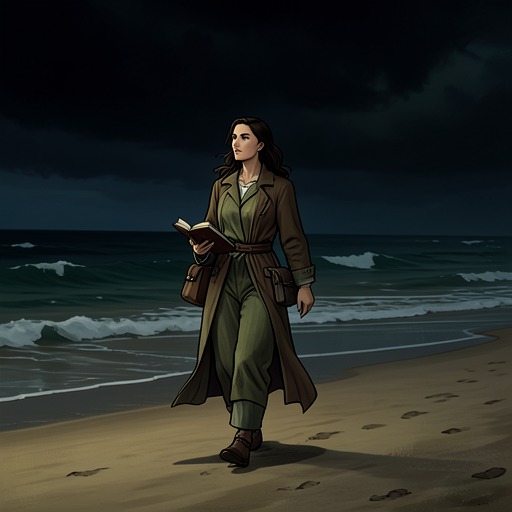
As the journey proceeds, the path becomes a method of attention. On a hot cliff path, pain in the legs, hips, and shoulders gives way to the sensations of height, wind, salt, and vertigo. The narrator feels lifted by the wind while Moth leans away from the sea; the same exposed route is experienced differently by two bodies. The landscape is not scenery laid behind the walk but an immediate force that shapes balance, fear, pleasure, and pace.
That knowledge develops through repetition. The coast’s rises and falls become a rhythm in which pain and hunger soften into ache and thirst, then recede behind the booming sea. At Port Quin, the walkers pass a place marked by the remembered departure of fishermen for Canada, while their own forward view keeps narrowing towards the next corner and drop. The path links physical passage to an awareness of lives and absences embedded in the coast, without making those histories interchangeable with their own.
At Morwenstow, shelter in Robert Stephen Hawker’s driftwood hut brings the walkers close to another response to exposed land. Hawker’s hut, now the smallest property owned by the National Trust, stands on cliffs above the sea; its shelter and isolation suggest why someone might seek a place where thought could be freed by the surrounding rocks, air, and sky. The walkers take refuge there from the heat, but their circumstances also make the image of shelter precarious: they are short of food, enduring a second day on fudge, and choosing whether they can afford to divert inland for a café. The path’s beauty never cancels the bodily and economic conditions of walking it.
Salt as rhythm and transformation
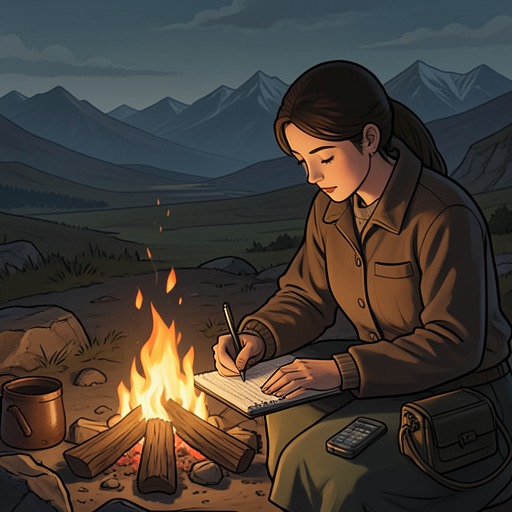
The salt path acquires its clearest figurative meaning when the walkers collect mussels near Zacry’s Island, boil them in a pan, and use a penknife to pick out the meat. Around this ordinary act, the narrator describes a shift from being participants in the human world to becoming observers. The edges of their former world seem to fade as sea, sky, and rock draw their attention outward. The salt path names this gradual reorientation: a life made more closely responsive to the wild edge they inhabit.
The walk also becomes a way to live through grief without claiming to resolve it. The narrator reflects that repeating a more acceptable account of their homelessness has made the pain of loss feel less immediate. The walk, once expected to help them get their thoughts straight and make plans, has instead become a kind of meditation: salt wind, dust, and light occupy attention, while each step and each climbed combe supplies a small, temporary reason to continue. This is not proof that the underlying losses have disappeared. The narrator wonders whether the same uncertainty and denial are present in confronting Moth’s illness. Walking offers a present-tense practice of endurance, not a guarantee of recovery or certainty.
At Land’s End, the choice to continue makes the path’s relation to agency especially clear. The walkers could leave the coast and return towards the familiarity of Wales, but after a bus departs they choose to put on their packs and walk on. They are soaked, cold, hungry, and tired, yet the decision matters because it is theirs. Their freedom is not freedom from hardship; it is the ability, for now, to choose whether to walk or stop. With little food and money, they camp in nylon between themselves and Canada, exposed to the coast but still moving by their own decision.
Home on the moving path
At the southernmost point of the mainland, the path turns north, and the change of direction becomes an inward change as well. The narrator recognizes that the old home will not be regained: the remembered door, slate floor, garden, and familiar northern Plough belong to a life that cannot simply be resumed. The foot-wide strip of dirt has become home not because it provides property or security, but because walking it sustains a sense of movement and connection. The narrator describes a new acceptance taking shape through sun and storms: belonging to the elements without possessing a patch of land. The self is not restored to its former circumstances, but is felt as still present and growing stronger with each headland.
When the pair later return to the coast after a winter away, the path offers recognition without erasing change. They arrive by ferry from Poole at South Haven Point, the route’s finish, and begin walking back west to the place where their earlier journey stopped. The familiar white acorn marker identifies the 630 miles between South Haven Point and Minehead, but for them the marker is a beginning at the end. The return is shadowed by Moth’s confusion and the developing mental decline associated with corticobasal degeneration. The narrator feels the old pull of the path and the comfort of its familiar unknown, even as Moth’s condition makes the journey’s future less assured.
The path’s promise of order becomes most fragile when Plymouth lies ahead. For months, knowing that the next day would mean packing the tent and walking has supplied a form of security. Nearing the end of the trail, the narrator fears what will happen when walking must stop and life among other people begins again, especially what will happen to Moth. Practical uncertainty returns in the form of disrupted plans and choices about money, routes, and shelter. The path can carry the walkers forward, but it cannot decide what waits beyond it. Its deepest significance is therefore not that it solves homelessness or illness, but that, while it remains walkable, it makes a provisional home out of direction, shared effort, and the next step.